Total Pageviews

Sunday, June 21, 2026

can do पीढ़ी भारत


"Can Do पीढ़ी भारत" एक ऐसी पहल है जो भारतीय युवा पीढ़ी को सक्षम बनाने और उन्हें आत्मनिर्भर भारत के निर्माण में भागीदार बनाने के लिए है। इस पहल का मुख्य उद्देश्य युवा पीढ़ी को नौकरी नहीं बल्कि नौकरी देने वाले बनाना है, जिससे भारतीय अर्थव्यवस्था को सशक्त और सुस्त बनाने में मदद मिले।

यहां "Can Do पीढ़ी भारत" पहल के महत्वपूर्ण पहलु हैं:

  1. नौकरी से आत्मनिर्भरता: "Can Do पीढ़ी भारत" का मुख्य फोकस युवा पीढ़ी को नौकरी खोजने की बजाय उन्हें नौकरी देने वाले बनाने पर है। इसका मकसद युवाओं को उद्यमिता और उद्योगिता की दिशा में मार्गदर्शन करना है ताकि वे खुद का व्यवसाय कर सकें और अपनी आवश्यकताओं को पूरा करने के लिए स्वावलम्बी बन सकें।

  2. व्यवसायिक योजनाएं और उपाय: इस पहल के तहत, युवाओं को व्यवसायिक योजनाएं तैयार करने में मदद की जाती है, जिनमें उनके उद्योग की आरंभिक चरण, वित्तीय प्रबंधन, विपणन और विपणी के उपाय शामिल होते हैं।

  3. प्रशिक्षण और उपस्किलिंग: युवाओं को व्यावसायिक प्रशिक्षण और उपस्किलिंग का मौका दिया जाता है ताकि वे व्यवसाय में समर्थ हो सकें और अधिक आवश्यक योग्यता प्राप्त कर सकें।

  4. वित्तीय सहायता: युवाओं को उनके उद्योग में निवेश के लिए वित्तीय सहायता और ऋण की पहुंच दी जाती है ताकि उन्हें अपने व्यवसाय को शुरू करने के लिए आरंभिक पूंजी मिले।

  5. सरकारी योजनाएं: "Can Do पीढ़ी भारत" के तहत सरकारी योजनाएं शामिल होती हैं जो युवाओं को उद्यमिता के क्षेत्र में सक्षम बनाने के लिए विभिन्न उपायों का समर्थन करती हैं।

  6. उद्योगों के साथ साझेदारी: युवाओं को उद्योगों के साथ साझेदारी के अवसर प्रदान किए जाते हैं, जो उन्हें व्यवसाय में प्रारंभ करने के लिए संभावना देते हैं।

"Can Do पीढ़ी भारत" का मुख्य उद्देश्य युवा पीढ़ी को आत्मनिर्भरता, उद्यमिता, और स्वावलम्बी बनाने के माध्यम से भारतीय अर्थव्यवस्था को मजबूत बनाने में सहायक होना है। यह पहल उन्हें नौकरी की तलाश में नहीं, बल्कि नौकरी देने वालों के रूप में विचार करने के लिए प्रोत्साहित करती है, जो अपने उद्यमिता और उद्योगिता के बजाय किसी को अपने प्रतिष्ठान के लिए सक्षम बनाने का साहस दिखाएं।


"CAN DO पीढ़ी भारत" एक पहल है जिसका उद्देश्य युवा पीढ़ी को उनकी क्षमताओं और पूरी सामर्थ्यशाली जीवन जीने की प्रेरणा देना है। इस पहल का मुख्य उद्देश्य यह है कि भारतीय युवा पीढ़ी खुद को समर्पित करने के साथ-साथ उनकी सोच, दृष्टिकोण और नीतियों में सकारात्मक परिवर्तन लाएं।

"CAN DO पीढ़ी भारत" के तहत विभिन्न प्रकार की पहलियों, कार्यक्रमों और संवादों के माध्यम से युवा पीढ़ी को स्वयं को साबित करने का एक मंच मिलता है। इसके माध्यम से वे अपने अंदर छिपी पूरी सामर्थ्यशाली और सकारात्मक शक्तियों को पहचान सकते हैं और उन्हें समृद्धि और सफलता की दिशा में मार्गदर्शन करने के लिए उन्हें आत्मविश्वास मिलता है।

इस पहल के तहत, युवा पीढ़ी को नौकरी की जगह रोजगारी देने के बजाय, वे आगे बढ़कर आत्मनिर्भरता और उद्यमिता की दिशा में काम करते हैं। यह पहल युवाओं को उनके रूचिकर क्षेत्र में मार्गदर्शन करने, उनके नौकरी के निर्माण के लिए स्वायत्तता से काम करने, और समाज में सकारात्मक परिवर्तन लाने के लिए प्रोत्साहित करता है।

"CAN DO पीढ़ी भारत" एक ऐसी उपलब्धि है जो युवा पीढ़ी को उनकी सामर्थ्यशाली पोजिटिविटी और नेतृत्व की ओर प्रोत्साहित करने का प्रयास करती है, ताकि वे भविष्य में समृद्धि, सफलता, और सामाजिक परिवर्तन की दिशा में कदम बढ़ा सकें।


आज के युवाओं में ‘कैन डू’ की भावना है जो हर पीढ़ी के लिए प्रेरणा का स्रोत है: पीएम मोदी

 https://newsonair.com/hindi/2022/01/13/todays-youth-have-the-spirit-of-can-do-which-is-a-source-of-inspiration-for-every-generation-pm-modi/
 
पीएम मोदी ने युवाओं को देश की असल ताकत करार देते हुए बुधवार को कहा कि दुनिया आज हमारी ओर आशा और विश्वास की दृष्टि से देख रही है। उन्होंने वर्तमान युवा पीढ़ी की ‘कैन डू’ की भावना को समस्त देशवासियों के लिए प्रेरणा का स्रोत बताया और कहा कि भारत आज जो कहता है, दुनिया उसे आने वाले कल की आवाज मानती है।
भारत की जनसंख्या युवा है और देश का मन भी युवा है।आज भारत के युवा में अगर श्रम का सामर्थ्य है, तो भविष्य की स्पष्टता भी है। इसीलिए, भारत आज जो कहता है, दुनिया उसे आने वाले कल की आवाज मानती है।
 
 
“भारत का जन भी युवा है, और भारत का मन भी युवा है। भारत अपने सामर्थ्य से भी युवा है, भारत अपने सपनों से भी युवा है। भारत अपने चिंतन से भी युवा है, भारत अपनी चेतना से भी युवा है।”
 

Top 10 field where india and word economy growth depends in next 5 - 10 years (2026- 2030)


Top 10 fields projected to drive economic growth for India and the global economy over the next 5–10 years (2026- 2030)

  1. Green Energy and Climate Tech
    • Transitioning to renewable energy sources (solar, wind, hydrogen) and climate tech innovations is critical for energy security, job creation, and reducing carbon footprints. This sector is essential for India and other countries to meet climate goals while powering sustainable growth.
  2. Digital Infrastructure and Connectivity
    • High-speed internet, 5G, and advanced digital infrastructure are the backbone of modern economies. They enable e-commerce, digital health, online education, and smart cities. For India, further internet penetration, especially in rural areas, is key to equitable growth.
  3. Healthcare and Pharmaceutical Innovation
    • Growing health demands and an aging population globally mean healthcare innovations, such as biotech, personalized medicine, and telehealth, will drive economic value. India, a major pharmaceuticals hub, stands to benefit from increased investment in healthcare R&D.
  4. AgriTech and Food Security
    • With global food demands rising, innovations in agriculture (precision farming, sustainable practices, genetic engineering) are essential. India, as a major agricultural economy, can leverage tech to boost productivity and ensure food security for its large population.
  5. Advanced Manufacturing and Industry 4.0
    • Automation, AI, and IoT are transforming manufacturing processes, leading to “smart factories.” India’s “Make in India” initiative aims to strengthen domestic manufacturing capabilities, fostering exports and creating jobs.
  6. Electric Vehicles and Sustainable Mobility
    • The shift to electric vehicles and sustainable transportation solutions is essential for reducing emissions and pollution. This sector is gaining support globally, with infrastructure developments for EVs, battery tech, and urban mobility solutions accelerating growth.
  7. Financial Technology (Fintech)
    • Fintech innovations are transforming access to banking, credit, and investment services. In India, fintech is expanding financial inclusion through digital payments, digital lending, and decentralized finance (DeFi), creating a more inclusive financial ecosystem.
  8. Real Estate and Smart Cities
    • Urbanization and rising housing demands are boosting real estate development. Globally, there’s a push for sustainable “smart cities” that leverage IoT and AI to improve urban living. In India, the “Smart Cities Mission” is vital for creating eco-friendly urban spaces.
  9. Education and Workforce Development
    • EdTech and reskilling initiatives are essential as the global workforce adapts to digital and technical demands. For India, developing skills in AI, data science, and digital literacy will support economic growth and make its workforce globally competitive.
  10. Space and Satellite Technology
    • Space exploration, satellite internet, and earth observation are creating a new economic frontier. India’s space sector, with initiatives like ISRO’s Mars mission and lunar exploration, positions the country to expand into commercial space and satellite-based services, attracting investment and global partnerships.


पंजाब में नशे की समस्या का हवका देने वाली सरकार और सभी पार्टियों से अनुरोध - दारू or Cigarette भी एक नशा है क्या भारत सरकार अपने टैक्स प्रोफिट से ऊपर उठकर शराब, Cigarette बैन कर पायेगी देश भर में ।

पंजाब में नशे की समस्या का हवका देने वाली सरकार  और सभी पार्टियों से अनुरोध 

Refuse to pay taxes if govt doesn't curb 'hydra-headed' corruption: Bombay HC


Daru ban in India
दारू भी एक नशा है क्या भारत सरकार अपने टैक्स प्रोफिट से ऊपर उठकर शराब बैन कर पायेगी देश भर में
या सरकार का टैक्स प्रॉफिट देश में नशे से होने वाली समस्या से ऊपर हैं
सवाल यह सरकार की नीयत का भी हैं चाहे वो राज्य सरकार हो और केन्द्र सरकार , सरकार की नीयत बहुत मैटर रखती है।


Cigarette ban in India
Cigarette भी एक  नशा है क्या भारत सरकार अपने टैक्स प्रोफिट से ऊपर उठकर Cigarette बैन कर पायेगी देश भर में या सरकार का टैक्स प्रॉफिट देश में नशे से होने वाली समस्या से ऊपर हैं
सवाल यह सरकार की नीयत का भी हैं चाहे वो राज्य सरकार हो और केन्द्र सरकार , सरकार की नीयत बहुत मैटर रखती है।

DLF Cybercity Gurgaon
All Cigarette shops just 10 meter distance  from metro station


DLF Cybercity Gurgaon
All Cigarette shops just 10 meter distance from metro station

  • 80- 90 % taxes should be applied in all tobacco product  to make India cancer free
  • All Tobacco companies should have social responsibility and government should make some frame work so that all companies in this sector or MNC should reinvest 50 % of their profit in Indian economy or basic infrastructure creation. Like school…..
  • Government may give some tax benefit to promote their reinvestment in INDIA.
  • Currently big tobacco company organizing cricket matches or other games and indirectly marketing their product Due to this people are influencing, they are earning lots of money and bring back to other countries. Means India money going out of India.
  •  If government will increase the taxes on these products they will also increase the cost of product to maintain the operating cost and end user will reduce the quantity of tobacco product. Directly reducing the cause of cancers.
  • Government can reinvest collected heavy taxes in education program in India.
  • Selling of tobacco product like sigret, gutka, pan masala should be ban ,  Camel room ( Smoking  Room)  have to be establish  by offices Private/government, or openly  Smoking should be ban and penalty of 5000/- or 10000/- need to be imposed to companies , or place owners if some one found smoking at office campus, Railway authority, hospital administration, school principal, collage administration,Government office,
  • smoking should be ban  at Public Place like Office campus (like DLF Cyber city), Education campus, railway, Hospital, Railway , Metro station - 500 meter campus
  •   also 500 rs penalty for individual who caught smoking at public place 

Feed Back & Government Initiative


  • India is the second largest tobacco producing nation in the world and 1 million Indians die each year from cancer caused by smoking and chewing tobacco
  • Australian study has shown plain packaging makes smokers think about quitting more often.
  • One third of Indians use tobacco - that's about 400 million people. It's estimated the cost of treating tobacco related illness is more than $US5 billion a year. 
  • Indian parliament calling for logos and company branding to be totally removed from tobacco products.
  •          Draft Cigarettes and other Tobacco Product (Prohibition of advertisement and regulation of trade and commerce, production, supply and distribution) Amendment bill 2015
    http://www.prsindia.org/uploads/media//draft/Tobacco%20Act.pdf


देश के सभी सैनिक स्कुलो को देश की बेटियों के लिए खोल दिया जाएगा।

"देश के सभी सैनिक स्कूलों को देश की बेटियों के लिए खोला जाएगा" यह एक महत्वपूर्ण और प्रेरणादायक कदम है जो भारत में शिक्षा के क्षेत्र में सामाजिक समानता और लिंग समानता की दिशा में बदलाव लाने का प्रयास कर रहा है। यह कदम बेटियों को ज्यादा शिक्षा के अवसर प्रदान करने और उन्हें संज्ञान में लेने का भी प्रयास है।

क्यों खोले जा रहे हैं सैनिक स्कूल बेटियों के लिए:

  1. शिक्षा के समान अवसर: इस कदम से भारत की बेटियों को सैनिक स्कूलों की तरह की उच्च शिक्षा के समान अवसर मिलेंगे।

  2. समाज में समानता: यह पहल लिंग समानता और समाज में समानता की भावना को बढ़ावा देगा। बेटियों को सैनिक शिक्षा के क्षेत्र में पहुंच देना इन्हें समाज में और भी सम्मान और स्वावलंबी बनाएगा।

  3. नेतृत्व के अवसर: सैनिक स्कूल बेटियों को नेतृत्व की शिक्षा प्रदान करेंगे, जिससे वे समाज में महत्वपूर्ण भूमिका निभा सकेंगी।

  4. राष्ट्रीय सुरक्षा में योगदान: समाज में और अधिक महिला नेतृत्व का विकास होगा, जिससे वे राष्ट्रीय सुरक्षा में भी योगदान कर सकेंगी।

सरकारी पहल:

  1. स्कूलों की स्थापना: सरकार समाज में लिंग समानता की भावना के साथ सैनिक स्कूलों की स्थापना करेगी जो केवल बेटियों के लिए होंगे।

  2. शिक्षा में सुधार: सैनिक स्कूलों में शिक्षा की गुणवत्ता को बढ़ावा देने के लिए सरकार संवेदनशील होगी और विशेष ध्यान देगी।

  3. विशेष योजनाएं: सरकार स्कूलों की विशेष योजनाएं बनाएगी जिनमें बेटियों को शिक्षा के क्षेत्र में उच्चतम स्तर की शिक्षा प्राप्त करने का अवसर मिलेगा।

  4. वित्तीय सहायता: सरकार स्कूलों को वित्तीय सहायता प्रदान करेगी ताकि वह शिक्षा के क्षेत्र में उच्चतम मानकों को पारित कर सकें।

इस पहल का मुख्य उद्देश्य है कि भारतीय बेटियों को शिक्षा के क्षेत्र में अधिक अवसर प्रदान किया जाए और समाज में समानता की भावना को बढ़ावा दिया जाए।

आसियान देश-आसियान भारत का चौथा सबसे बडा व्यापारिक भागीदार है।

थाइलैंड, इंडोनेशिया, मलेशिया, म्यांमार, वियतनाम, फिलिपींस, ब्रुनेई, कंबोडिया और लाओस आसियान के सदस्य देश हैं, जिनके उत्पाद व्यापार मेले में खूब दिखे थे। आसियान भारत का चौथा सबसे बडा व्यापारिक भागीदार है।

आसियान क्या है?

आसियान (ASEAN) का पूरा नाम Association of Southeast Asian Nations है।

दक्षिण-पूर्व एशियाई देशों का संगठन एक क्षेत्रीय संगठन है जो एशिया-प्रशांत के उपनिवेशी राष्ट्रों के बढ़ते तनाव के बीच राजनीतिक और सामाजिक स्थिरता को बढ़ावा देने के लिये स्थापित किया गया था।

आसियान का आदर्श वाक्य ‘वन विजन, वन आइडेंटिटी, वन कम्युनिटी’ है।

8 अगस्त आसियान दिवस के रूप में मनाया जाता है।

आसियान का सचिवालय इंडोनेशिया के राजधानी जकार्ता में है।

सदस्य राष्ट्र

  1. इंडोनेशिया
  2.  
  3. मलेशिया
  4.  
  5. फिलीपींस
  6.  
  7. सिंगापुर
  8.  
  9. थाईलैंड
  10.  
  11. ब्रुनेई
  12.  
  13. वियतनाम
  14.  
  15. लाओस
  16.  
  17. म्यांमार
  18.  
  19. कंबोडिया

आसियान की उत्पत्ति

  • 1967 - आसियान घोषणापत्र (बैंकॉक घोषणा) पर संस्थापक राष्ट्रों द्वारा हस्ताक्षर करने के साथ आसियान की स्थापना हुई।
  • आसियान के संस्थापक राष्ट्र हैं: इंडोनेशिया, मलेशिया, फिलीपींस, सिंगापुर और थाईलैंड।
  • 1990 के दशक में - वर्ष 1975 में वियतनाम युद्ध के अंत और वर्ष 1991 में शीत युद्ध के बाद क्षेत्र में बदलती परिस्थितियों के बाद सदस्यता दोगुनी हो गई।
  • ब्रुनेई (1984), वियतनाम (1995), लाओस और म्यांमार (1997), और कंबोडिया (1999) सदस्य राष्ट्रों में शामिल हुए।
  • 1995 - दक्षिण पूर्व एशिया को परमाणु मुक्त क्षेत्र बनाने के लिये सदस्यों ने एक समझौते पर हस्ताक्षर किये।
  • 1997 - आसियान विजन 2020 को अपनाया गया।
  • 2003 - आसियान समुदाय की स्थापना के लिये बाली कॉनकॉर्ड द्वितीय।
  • 2007 - सेबू घोषणा, 2015 तक आसियान समुदाय की स्थापना में तेजी लाने के लिये।
  • 2008 - आसियान चार्टर लागू हुआ और कानूनी रूप से बाध्यकारी समझौता हुआ।
  • 2015 - आसियान समुदाय का शुभारंभ।

आसियान समुदाय में तीन स्तंभ शामिल हैं:

  • आसियान राजनीतिक-सुरक्षा समुदाय
  • आसियान आर्थिक समुदाय
  • आसियान सामाजिक-सांस्कृतिक समुदाय

उद्देश्य

  • दक्षिण पूर्व एशियाई देशों के समृद्ध और शांतिपूर्ण समुदाय के लिये आर्थिक विकास, सामाजिक प्रगति तथा सांस्कृतिक विकास में तेजी लाने हेतु।
  • न्याय और कानून के शासन के लिये सम्मान तथा संयुक्त राष्ट्र चार्टर के सिद्धांतों के पालन के माध्यम से क्षेत्रीय शांति और स्थिरता को बढ़ावा देना।
  • आर्थिक, सामाजिक, सांस्कृतिक, तकनीकी, वैज्ञानिक और प्रशासनिक क्षेत्रों में सामान्य हित के मामलों पर सक्रिय सहयोग और पारस्परिक सहायता को बढ़ावा देना।
  • कृषि और उद्योगों के अधिक उपयोग, व्यापार विस्तार, परिवहन और संचार सुविधाओं में सुधार और लोगों के जीवन स्तर सुधार में अधिक प्रभावी ढंग से सहयोग करने के लिये।
  • दक्षिण पूर्व एशियाई अध्ययन को बढ़ावा देने के लिये।
  • मौज़ूदा अंतरराष्ट्रीय और क्षेत्रीय संगठनों के साथ घनिष्ठ और लाभप्रद सहयोग बनाए रखने के लिये।

वर्ष1976 की दक्षिण पूर्व एशिया एमिटी और सहयोग संधि (TAC) में ASEAN के निम्नलिखित मूलभूत सिद्धांत सम्‍मिलित हैं:

  • स्वतंत्रता, संप्रभुता, समानता, क्षेत्रीय अखंडता और सभी देशों की राष्ट्रीय पहचान के लिये पारस्परिक सम्मान।
  • बाहरी हस्तक्षेप या जबरदस्ती से मुक्त अपने राष्ट्रीय अस्तित्व का नेतृत्व करने का प्रत्येक राष्ट्र का अधिकार।
  • एक-दूसरे के आंतरिक मामलों में हस्तक्षेप नहीं करना।
  • शांतिपूर्ण तरीके से मतभेद या विवादों का निपटारा।
  • शक्ति उपयोग अथवा उपयोग करने की चेतावनी का त्याग।
  • आपस में प्रभावी सहयोग।

संस्था तंत्र

  • सदस्य देशों के अंग्रेजी नामों के वर्णानुक्रम के आधार पर आसियान की अध्यक्षता प्रतिवर्ष परिवर्तित होती है।
  • आसियान शिखर सम्मेलन: आसियान की सर्वोच्च नीति बनाने वाली संस्था, शिखर सम्मेलन, आसियान की नीतियों और उद्देश्यों के लिये दिशा निर्धारित करती है। चार्टर के तहत शिखर सम्मेलन एक वर्ष में दो बार होता है।
  • आसियान मंत्रालयिक परिषद: शिखर सम्मेलन को समर्थन देने के लिये चार महत्वपूर्ण नए मंत्रालयिक निकाय स्थापित किये गए हैं।
  • आसियान समन्वय परिषद (एसीसी)
  • आसियान राजनीतिक-सुरक्षा समुदाय परिषद
  • आसियान आर्थिक समुदाय परिषद
  • आसियान सामाजिक-सांस्कृतिक समुदाय परिषद
  • निर्णय लेना: आसियान में निर्णय लेने का प्राथमिक तरीका परामर्श और सहमति है।
  • हालाँकि, चार्टर आसियान-X के सिद्धांत को सुनिश्चित करता है - इसका अर्थ है कि यदि सभी सदस्य राष्ट्र सहमति में हैं, तो भागीदारी के लिये एक सूत्र का उपयोग किया जा सकता है ताकि जो सदस्य तैयार हों वे आगे बढ़ सकें जबकि वे सदस्य जिन्हें कार्यान्वयन के लिये अधिक समय की आवश्यकता हो एक समय-रेखा लागू कर सकते हैं।

आसियान के नेतृत्व वाले मंच

  • आसियान क्षेत्रीय मंच (एआरएफ): वर्ष 1993 में शुरू किया गया सत्ताईस सदस्यीय बहुपक्षीय समूह क्षेत्रीय विश्वास निर्माण और निवारक कूटनीति में योगदान करने के लिये राजनीतिक और सुरक्षा मुद्दों पर सहयोग हेतु विकसित किया गया था।
  • आसियान प्लस थ्री: 1997 में शुरू किया गया परामर्श समूह आसियान के दस सदस्यों, चीन, जापान और दक्षिण कोरिया को एक साथ लाता है।
  • पूर्वी एशिया शिखर सम्मेलन (ईएएस): यह पहली बार वर्ष 2005 में आयोजित हुआ था।शिखर सम्मेलन का उद्देश्य क्षेत्र में सुरक्षा और समृद्धि को बढ़ावा देना है। आमतौर पर आसियान, ऑस्ट्रेलिया, चीन, भारत, जापान, न्यूजीलैंड, रूस, दक्षिण कोरिया और संयुक्त राज्य अमेरिका के राष्ट्राध्यक्ष इसमें भाग लेते हैं।आसियान एजेंडा सेटर के रूप में एक केंद्रीय भूमिका निभाता है।

शक्तियाँ और अवसर

  • एकल रूप से अपने सदस्यों की तुलना में आसियान एशिया-प्रशांत व्यापार, राजनीतिक और सुरक्षा मुद्दों को अधिक प्रभावित करता है।
  • जनसंख्या भाग - यह दुनिया की तीसरी सबसे बड़ी जनसंख्या को समाहित करता है जिनमें आधी से अधिक जनसंख्या तीस वर्ष की आयु से कम है।
  • आर्थिक परिदृश्य:
  • दुनिया का तीसरा सबसे बड़ा बाज़ार: यूरोपीय संघ और उत्तरी अमेरिकी से भी बड़ा बाज़ार।
  • एशिया की तीसरी और विश्व की छठीं सबसे बड़ी अर्थव्यवस्था।
  • मुक्त व्यापार समझौते (एफटीए): चीन, जापान, दक्षिण कोरिया, भारत, ऑस्ट्रेलिया और न्यूजीलैंड के साथ समझौता।
  • वैश्विक स्तर पर चौथा सबसे लोकप्रिय निवेश का लक्ष्य है।
  • आसियान का वैश्विक निर्यात में भी हिस्सेदारी बढ़ गई है जो वर्ष 1967 के 2 प्रतिशत की तुलना में वर्ष 2016 तक 7 प्रतिशत हो गई है। यह आसियान की आर्थिक संभावनाओं के लिये व्यापार के बढ़ते महत्व को दर्शाता है।
  • आसियान सिंगल एविएशन मार्केट और ओपन स्काईज नीतियों ने इसकी परिवहन और कनेक्टिविटी क्षमता को बढ़ाया है।
  • साझा चुनौतियों से निपटने के लिये आसियान ने ज़रूरी मानदंडों का निर्माण करके और तटस्थ वातावरण को बढ़ावा देकर क्षेत्रीय स्थिरता में योगदान दिया है।

चुनौतियाँ

  • एकल बाज़ारों की आर्थिक और सामाजिक स्थिति में क्षेत्रीय असंतुलन।
  • आसियान सदस्य राष्ट्रों के बीच अमीरी और गरीबी का अंतर बहुत ज्यादा है तथा आय असमानता भी अधिक है।
  • सिंगापुर में प्रति व्यक्ति जीडीपी सबसे अधिक है लगभग 53,000 डॉलर (2016) जबकि कंबोडिया की प्रति व्यक्ति जीडीपी 1,300 डॉलर से भी कम है। कम विकसित देशों को क्षेत्रीय योजनाओं, प्रतिबद्धताओं को लागू करने के लिये संसाधनों की कमी का सामना करना पड़ता है।
  • सदस्यों राष्ट्रों की राजनीतिक प्रणाली अलग-अलग यथा लोकतंत्र, कम्युनिस्ट और सत्तावादी है।
  • दक्षिण चीन सागर संगठन में दरार पैदा करने वाला मुख्य मुद्दा है।
  • आसियान को मानव अधिकारों के प्रमुख मुद्दों पर विभाजित किया गया है। उदाहरण के लिये रोहिंग्याओं के खिलाफ म्यांमार में दरार।
  • चीन के संबंध में एक एकीकृत दृष्टिकोण पर बातचीत करने में असमर्थता, विशेष रूप से दक्षिण चीन सागर में इसके व्यापक समुद्री दावों के जवाब में।
  • आम सहमति पर अत्यधिक बल मुख्य दोष है, कठिन समस्याओं का सामना करने के बजाय टाल दिया जाता है।
  • सहमति को लागू करने के लिये कोई केंद्रीय तंत्र नहीं है।
  • अक्षम विवाद-निपटान तंत्र, चाहे आर्थिक हो या राजनीतिक।

भारत और आसियान

  • आसियान के साथ भारत का संबंध उसकी विदेश नीति और एक्ट ईस्ट पॉलिसी की नींव का एक प्रमुख स्तंभ है।
  • भारत के पास जकार्ता में आसियान और पूर्वी एशिया शिखर सम्मेलन (ईएएस) के लिये एक अलग-अलग मिशन हैं।
  • भारत और आसियान में पहले से ही 25 साल की डायलॉग पार्टनरशिप, 15 साल की समिट लेवल इंटरेक्शन और 5 साल की स्ट्रेटेजिक पार्टनरशिप है।

आर्थिक सहयोग:

  • आसियान भारत का चौथा सबसे बड़ा व्यापारिक भागीदार है।
  • आसियान के साथ भारत का अनुमानित व्यापार भारत के कुल व्यापार का लगभग 10.6% है।
  • भारत के कुल निर्यात का आसियान से निर्यात लगभग 11.28% है।
  • भारत और आसियान देशों के निजी क्षेत्र के प्रमुख उद्यमियों को एक मंच पर लाने के लिये वर्ष 2003 में ASEAN India-Business Council (AIBC) की स्थापना की गई थी।

सामाजिक-सांस्कृतिक सहयोग: आसियान के साथ पीपल-टू-पीपल इंटरैक्शन को बढ़ावा देने के लिये कार्यक्रम जैसे- भारत में आसियान छात्रों को आमंत्रित करना, आसियान राजनयिकों के लिये विशेष प्रशिक्षण पाठ्यक्रम, सांसदों का आदान-प्रदान आदि।

निधियाँ: आसियान देशों को निम्नलिखित निधियों से वित्तीय सहायता प्रदान की गई है:

  • आसियान-भारत सहयोग कोष
  • आसियान-भारत एस एंड टी (Science and Technology) डेवलपमेंट कोष
  • आसियान-भारत ग्रीन फंड

दिल्ली घोषणा: आसियान-भारत रणनीतिक साझेदारी के तहत सहयोग के प्रमुख क्षेत्र के रूप में समुद्री डोमेन में सहयोग करना।

दिल्ली संवाद: आसियान और भारत के बीच राजनीतिक सुरक्षा और आर्थिक मुद्दों पर चर्चा के लिये वार्षिक ट्रैक 1.5 कार्यक्रम।

आसियान-भारत केंद्र (AIC): भारत और आसियान में संगठनों और थिंक-टैंकों के साथ नीति अनुसंधान, रक्षा तथा नेटवर्किंग गतिविधियों को शुरू करने के लिये।

राजनीतिक सुरक्षा सहयोग: भारत आसियान को अपने सभी क्षेत्रों में सुरक्षा और विकास के इंडो-पैसिफिक विजन के केंद्र में रखता है।

बे ऑफ़ बंगाल इनिशिएटिव फॉर मल्टी सेक्टरल टेक्निकल एंड इकोनॉमिक को-ऑपरेशन

(Bay of Bengal Initiative for Multi-Sectoral Technical and Economic Cooperation- BIMSTEC)

BIMSTEC क्या है?

  • बे ऑफ़ बंगाल इनिशिएटिव फॉर मल्टी सेक्टरल टेक्निकल एंड इकोनॉमिक को-ऑपरेशन एक क्षेत्रीय बहुपक्षीय संगठन है।
  • इसके सदस्य राष्ट्र बंगाल की खाड़ी के तटवर्ती और समीपवर्ती क्षेत्रों में हैं जो क्षेत्रीय क्षेत्रीय एकता का निर्माण करते हैं।

7 सदस्यों में से 5 दक्षिण एशिया से हैं:

  • बांग्लादेश
  • भूटान
  • भारत
  • नेपाल
  • श्रीलंका

2 सदस्य राष्ट्र दक्षिण-पूर्व एशिया से हैं:


National Population Register NPR - How can I apply for NPR registration?

National Population Register 

How can I apply for NPR registration?

The National Population Register (NPR) is a database which denotes the identities of an Indian residence. - that uses the biometric reduplicated number of Aadhaar and provides one with a place in the National Population Register i.e. Indian National status.

The Multipurpose National Identity card - will be a smart card that will be issued to all people who are in the National Population Register

The National Population Register (NPR) is Registration of Citizens and issue of National Identity Cards (under provisions of the Citizenship Act 1955)

https://npr-rgi.nic.in/Account/LogOn?ReturnUrl=%2f


The Registrar General of India (RGI) is responsible for enrolling individuals in the NPR scheme.
NPR is to create a comprehensive identity database of every usual resident in the country. The database would contain demographic as well as biometric particulars.

The following demographic details of every individual are required for every usual resident:
  • Name of person
  • Relationship to head of household
  • Father’s name
  • Mother’s name
  • Spouse’s name (if married)
  • Sex
  • Date of Birth
  • Marital status
  • Place of birth
  • Nationality (as declared)
  • Present address of usual residence
  • Duration of stay at present address
  • Permanent residential address
  • Occupation/Activity
  • Educational qualification

Don’t Pay Taxes if Government Fails to Curb Corruption": High Court's Ruling and Its Implications


Title: "Don’t Pay Taxes if Government Fails to Curb Corruption": High Court's Ruling and Its Implications

Ref: 

https://timesofindia.indiatimes.com/city/nagpur/dont-pay-taxes-if-government-fails-to-curb-corruption-hc/articleshow/50826888.cms


Introduction:

The recent ruling by the High Court regarding tax payment in India has sparked debates and discussions across the country. The High Court's statement, "Don't pay taxes if the government fails to curb corruption," has raised important questions about the responsibility of citizens, the role of the government, and the efficacy of anti-corruption measures. This article delves into the ruling, its implications, and the broader issue of corruption in India.

The High Court's Ruling:

The ruling was issued by the High Court in response to a petition filed by a citizen highlighting the rampant corruption in various government departments. The petitioner argued that the government had failed to curb corruption despite numerous anti-corruption measures and campaigns. In response, the High Court made a bold statement, suggesting that citizens should not pay taxes if the government fails to address corruption effectively.

Implications of the Ruling:

The High Court's ruling has far-reaching implications for both the government and the citizens:

1. Government Accountability:

  • The ruling underscores the importance of government accountability and the need for effective anti-corruption measures.
  • It puts pressure on the government to take concrete steps to curb corruption and ensure transparency and accountability in its functioning.

2. Citizen Empowerment:

  • The ruling empowers citizens to demand accountability from the government and hold it responsible for addressing issues like corruption.
  • It encourages citizens to actively participate in governance and raise their voices against corruption and maladministration.

3. Tax Compliance:

  • The ruling raises questions about the obligation of citizens to pay taxes to a government that fails to address corruption effectively.
  • It highlights the link between tax compliance and governance, suggesting that citizens may withhold taxes if the government fails to deliver on its promises.

4. Legal Precedent:

  • The ruling sets a legal precedent for future cases involving government accountability and citizen rights.
  • It sends a strong message to the government that citizens have the right to demand transparency, accountability, and good governance.

The Issue of Corruption in India:

Corruption has been a pervasive issue in India for decades, affecting almost every aspect of public life:

1. Systemic Corruption:

  • Corruption is deeply ingrained in the Indian bureaucratic system, with reports of bribery, kickbacks, and embezzlement rampant across various government departments.
  • The lack of transparency and accountability in government functioning has allowed corruption to flourish unchecked.

2. Impact on Governance:

  • Corruption undermines the rule of law, erodes public trust in government institutions, and hampers economic development.
  • It leads to inefficiency, delays, and misallocation of resources, ultimately affecting the delivery of public services and welfare programs.

3. Anti-Corruption Measures:

  • Over the years, successive governments have introduced various anti-corruption measures and campaigns to tackle the issue.
  • However, the effectiveness of these measures has been limited, with corruption persisting at various levels of government.

4. Need for Systemic Reforms:

  • Addressing corruption requires systemic reforms aimed at improving transparency, accountability, and integrity in government functioning.
  • This includes strengthening anti-corruption laws, enhancing the efficiency of law enforcement agencies, and promoting a culture of honesty and integrity.

Public Perception and Response:

The High Court's ruling has received mixed reactions from the public:

1. Support for the Ruling:

  • Many citizens have welcomed the ruling as a much-needed step to hold the government accountable for its failure to address corruption.
  • They believe that withholding taxes is a legitimate form of protest against government inaction and corruption.

2. Concerns and Criticisms:

  • Some have expressed concerns about the practicality and legality of the ruling, arguing that tax evasion is not the solution to corruption.
  • They believe that withholding taxes could lead to legal consequences and further undermine the rule of law.

3. Calls for Action:

  • The ruling has sparked calls for greater citizen activism and engagement in the fight against corruption.
  • Many are calling for concrete action from the government to address the root causes of corruption and improve governance.

The Way Forward:

The High Court's ruling has opened up a much-needed dialogue about corruption and governance in India:

1. Government Accountability:

  • The government must take the High Court's ruling seriously and redouble its efforts to combat corruption.
  • It needs to strengthen anti-corruption laws, streamline administrative processes, and promote transparency and accountability in its functioning.

2. Citizen Engagement:

  • Citizens must actively engage with the government and hold it accountable for its actions.
  • They should use legal and democratic means to demand transparency, accountability, and good governance.

3. Strengthening Institutions:

  • India needs stronger institutions and mechanisms to prevent, detect, and punish corruption.
  • This includes an independent and effective judiciary, empowered anti-corruption agencies, and a vigilant civil society.

4. Transparency and Public Participation:

  • There is a need for greater transparency in government functioning and increased public participation in decision-making processes.
  • Citizens should have access to information about government policies, programs, and expenditures, enabling them to hold the government accountable.

Conclusion:

The High Court's ruling on tax payment and corruption has sparked an important debate about governance, accountability, and citizen rights in India. While the ruling may have its limitations and practical challenges, it sends a strong message to the government about the need to address corruption effectively. It is now up to the government and citizens to work together to tackle corruption, promote transparency, and strengthen democratic governance in the country. With concerted efforts from all stakeholders, India can build a more transparent, accountable, and corruption-free society.


Prime Minister’s Young Authors Mentorship Scheme (YUVA) Scheme

 यहाँ YUVA - प्रधानमंत्री युवा लेखक मेंटरशिप योजना पर 10,000 शब्दों का विस्तृत लेख तैयार किया जा रहा है। इस लेख में योजना की पृष्ठभूमि, उद्देश्य, कार्यप्रणाली, लाभ, प्रभाव, सफलताएँ, चुनौतियाँ और भविष्य की संभावनाएँ शामिल होंगी।

प्रस्तावना

भारत एक युवा राष्ट्र है, जहाँ युवाओं की शक्ति और रचनात्मकता को प्रोत्साहित करने के लिए सरकार विभिन्न योजनाएँ चलाती रही है। प्रधानमंत्री युवा लेखक मेंटरशिप योजना (YUVA - Young, Upcoming, and Versatile Authors) एक ऐसी ही अनूठी पहल है, जिसका उद्देश्य नवोदित लेखकों को मार्गदर्शन और समर्थन प्रदान करना है। यह योजना भारत की समृद्ध साहित्यिक परंपरा को आगे बढ़ाने और भारतीय भाषाओं में गुणवत्ता साहित्य का निर्माण करने का एक महत्वपूर्ण प्रयास है।

योजना की पृष्ठभूमि

YUVA योजना को नेशनल बुक ट्रस्ट (NBT), इंडिया के माध्यम से शिक्षा मंत्रालय, भारत सरकार द्वारा 2021 में शुरू किया गया था। इसका मुख्य उद्देश्य युवा लेखकों की प्रतिभा को निखारना और उन्हें राष्ट्रीय एवं अंतर्राष्ट्रीय स्तर पर स्थापित करना है। यह योजना 75 युवा लेखकों को उनकी रचनात्मकता को बढ़ावा देने और उन्हें वित्तीय सहायता एवं प्रशिक्षण देने के लिए चुना जाता है।

इस योजना की शुरुआत आजादी का अमृत महोत्सव के हिस्से के रूप में की गई थी, जिसमें स्वतंत्रता संग्राम, स्वतंत्रता सेनानियों, अनसुनी कहानियों और राष्ट्र निर्माण में योगदान जैसे विषयों को बढ़ावा देने पर जोर दिया गया। इस योजना के तहत चुने गए युवा लेखकों को उनकी पुस्तकों को प्रकाशित करने और व्यापक पाठकों तक पहुँचाने का अवसर मिलता है।


अध्याय 1: YUVA योजना का उद्देश्य और महत्व

1.1 योजना के मुख्य उद्देश्य
YUVA योजना के निम्नलिखित प्रमुख उद्देश्य हैं:

  1. युवा लेखकों को मंच प्रदान करना: युवा भारतीय लेखकों को उनके विचारों और कहानियों को साझा करने का अवसर देना।
  2. भारतीय साहित्य को बढ़ावा देना: भारतीय भाषाओं में गुणवत्तापूर्ण साहित्य तैयार करना और पढ़ने की संस्कृति को बढ़ावा देना।
  3. राष्ट्रीय पहचान का निर्माण: भारत की सांस्कृतिक, ऐतिहासिक और सामाजिक विविधता को साहित्य के माध्यम से प्रस्तुत करना।
  4. रोजगार के अवसर उत्पन्न करना: साहित्य और प्रकाशन क्षेत्र में करियर बनाने के इच्छुक युवाओं को प्रशिक्षण और समर्थन प्रदान करना।
  5. वैश्विक मंच पर भारतीय साहित्य को ले जाना: भारतीय लेखकों को अंतर्राष्ट्रीय स्तर पर पहचान दिलाना और भारतीय साहित्य को बढ़ावा देना।

1.2 योजना का महत्व

  • यह योजना युवा लेखकों को साहित्य जगत में अपनी पहचान बनाने का एक अनूठा अवसर प्रदान करती है।
  • भारत की अनेक भाषाओं और संस्कृतियों को प्रोत्साहित करके "एक भारत, श्रेष्ठ भारत" की भावना को मजबूत करती है।
  • यह स्वतंत्रता संग्राम की अनसुनी कहानियों को जन-जन तक पहुँचाने में मदद करती है।
  • डिजिटल युग में प्रिंट मीडिया और साहित्य की प्रासंगिकता को बनाए रखने में सहायक है।

अध्याय 2: योजना की कार्यप्रणाली और संरचना

2.1 चयन प्रक्रिया
YUVA योजना में भाग लेने के लिए 30 साल से कम उम्र के युवा लेखक आवेदन कर सकते हैं। चयन प्रक्रिया निम्नलिखित चरणों में पूरी होती है:

  1. आवेदन और पांडुलिपि प्रस्तुत करना: इच्छुक लेखक अपनी रचनाएँ (1000 शब्दों का प्रस्ताव) ऑनलाइन पोर्टल के माध्यम से जमा करते हैं।
  2. विशेषज्ञ समिति द्वारा समीक्षा: एक उच्च स्तरीय विशेषज्ञ समिति आवेदनों की समीक्षा करती है और सर्वश्रेष्ठ 75 लेखकों का चयन करती है।
  3. प्रशिक्षण कार्यक्रम: चयनित लेखकों को नेशनल बुक ट्रस्ट (NBT) द्वारा छह महीने का ऑनलाइन और ऑफलाइन प्रशिक्षण दिया जाता है।
  4. पुस्तक प्रकाशन: प्रशिक्षण के बाद, लेखकों की किताबें प्रकाशित की जाती हैं और उन्हें नेशनल बुक ट्रस्ट द्वारा अंतरराष्ट्रीय स्तर पर प्रमोट किया जाता है।

2.2 वित्तीय सहायता और सुविधाएँ

  • चयनित लेखकों को ₹50,000 प्रति माह की फेलोशिप छह महीनों तक दी जाती है।
  • उनकी पुस्तकों का प्रकाशन और अंतरराष्ट्रीय बाजार में प्रचार NBT द्वारा किया जाता है।
  • उन्हें देश-विदेश के साहित्यिक आयोजनों में भाग लेने का अवसर मिलता है।

अध्याय 3: YUVA योजना के तहत प्रकाशित प्रमुख पुस्तकें और लेखकों की सफलता की कहानियाँ

3.1 उल्लेखनीय प्रकाशित पुस्तकें

YUVA योजना के अंतर्गत प्रकाशित कुछ प्रमुख पुस्तकें हैं:

  1. "आजादी के अनसुने नायक" – स्वतंत्रता संग्राम के गुमनाम नायकों की कहानियाँ।
  2. "भारत की सांस्कृतिक विरासत" – भारत की अद्वितीय सांस्कृतिक परंपराओं पर आधारित।
  3. "नवभारत के सपने" – भारत के भविष्य और युवाओं की भूमिका पर केंद्रित।

3.2 सफल युवा लेखकों की कहानियाँ

  • नीति शर्मा (दिल्ली) – "स्वतंत्रता संग्राम की अनकही कहानियाँ" लिखकर चर्चित हुईं।
  • अभिषेक मिश्रा (उत्तर प्रदेश) – "डिजिटल भारत और युवा पीढ़ी" पर पुस्तक प्रकाशित की।
  • साक्षी वर्मा (महाराष्ट्र) – "भारतीय महिला स्वतंत्रता सेनानी" पर लेखन कर पहचान बनाई।

अध्याय 4: YUVA योजना का सामाजिक और सांस्कृतिक प्रभाव

4.1 भारत में साहित्य को बढ़ावा

  • युवाओं में लेखन की रुचि बढ़ी।
  • साहित्यिक आयोजनों में भागीदारी बढ़ी।
  • भारतीय भाषाओं में अधिक गुणवत्तापूर्ण सामग्री प्रकाशित हुई।

4.2 शिक्षा और रोजगार पर प्रभाव

  • नई पीढ़ी को लेखन में करियर बनाने का अवसर मिला।
  • अध्ययन सामग्री में सुधार आया।
  • शिक्षा प्रणाली में रचनात्मक लेखन को बढ़ावा मिला।

अध्याय 5: योजना की चुनौतियाँ और समाधान

5.1 मुख्य चुनौतियाँ

  1. युवाओं में जागरूकता की कमी – कई युवा योजना की जानकारी से अनजान हैं।
  2. भाषाई असमानता – हिंदी और अंग्रेजी को प्राथमिकता मिलती है, अन्य भारतीय भाषाओं को अधिक समर्थन चाहिए।
  3. प्रकाशन की सीमाएँ – सभी चयनित लेखकों की किताबें समय पर प्रकाशित नहीं हो पातीं।

5.2 संभावित समाधान

  • योजना का प्रचार-प्रसार बढ़ाया जाए।
  • प्रादेशिक भाषाओं में अधिक सामग्री प्रकाशित की जाए।
  • डिजिटल पब्लिशिंग को प्रोत्साहित किया जाए।

निष्कर्ष और भविष्य की संभावनाएँ

YUVA योजना भारतीय युवा लेखकों के लिए एक ऐतिहासिक अवसर है, जो उन्हें राष्ट्रीय और अंतरराष्ट्रीय स्तर पर अपनी पहचान बनाने में मदद करता है। इस योजना का प्रभाव सिर्फ साहित्य तक सीमित नहीं है, बल्कि यह रोजगार, शिक्षा और सांस्कृतिक पुनर्जागरण में भी सहायक है।

भविष्य में, YUVA योजना को अधिक भारतीय भाषाओं में विस्तारित किया जाना चाहिए, जिससे अधिक युवा लेखक लाभान्वित हो सकें और भारत की साहित्यिक विरासत को समृद्ध किया जा सके

YUVA योजना – एक सशक्त भारत की ओर एक रचनात्मक कदम!

Ref: Press Release:Press Information Bureau

Empowering Young Writers for a Global Stage


­­­­Introduction

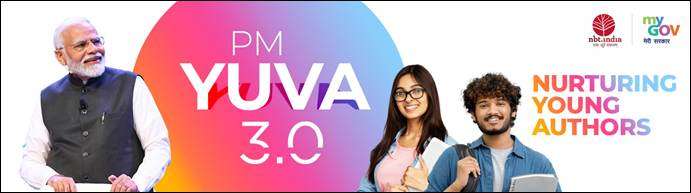
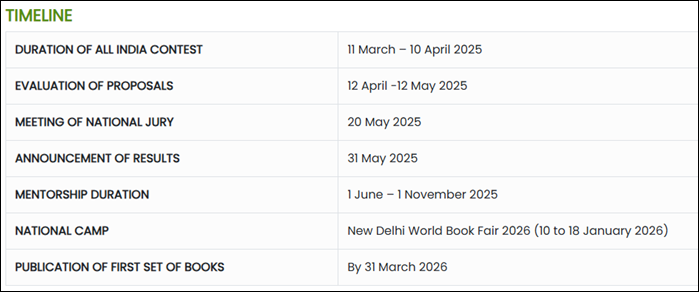
The Ministry of Education (MoE) and the National Book Trust (NBT) of India launched the third edition of the Prime Minister’s Young Authors Mentorship Scheme, known as YUVA 3.0, on March 11, 2025. The initiative aims to nurture young writers under 30 years of age, providing them with mentorship and exposure to hone their creative writing skills. YUVA 3.0 builds upon the success of its predecessors, YUVA 1.0 and YUVA 2.0, continuing the government's commitment to fostering literary talent and promoting reading, writing, and book culture in India. The scheme aligns with the vision of Ek Bharat, Shreshtha Bharat, encouraging the documentation and dissemination of India’s rich cultural heritage and knowledge.

YUVA 3.0: Features and Objectives

Theme and Focus

The Themes of PM-YUVA 3.0 are: Contribution of Indian Diaspora in Nation BuildingIndian Knowledge System; and Makers of Modern India (1950-2025). The scheme will help to develop a stream of writers who can write on various facets of India encompassing the past, present and future. Besides, the scheme will also provide a window to the aspiring youth to articulate themselves and present a comprehensive outlook of contribution of Indians across fields in ancient and present times.
 

Selection Process

  • The scheme invites applications from aspiring writers through MyGov India’s online portal.
  • A competitive process shortlists 50 young authors based on a well-defined evaluation criterion.
  • The National Book Trust (NBT) will constitute the selection committee.
  • Applicants are required to submit a book proposal of 10,000 words, which is then reviewed by a panel.
  • The shortlisted candidates undergo a multi-stage selection process before the final selection.


Mentorship and Support

  • Selected authors receive a mentorship program spanning six months.
  • The authors undergo workshopsinteractions with mentors, and exposure to India’s literary ecosystem.
  • They receive financial assistance of ₹50,000 per month for six months.
  • Their works are published and promoted by the NBT in multiple languages.
  • Under the mentorship, a National Camp will be held for the PM-YUVA 3.0 Authors during the New Delhi World Book Fair 2026.
  • Selected authors get the opportunity to present their work at literary festivals and international forums.


Background of the YUVA Scheme

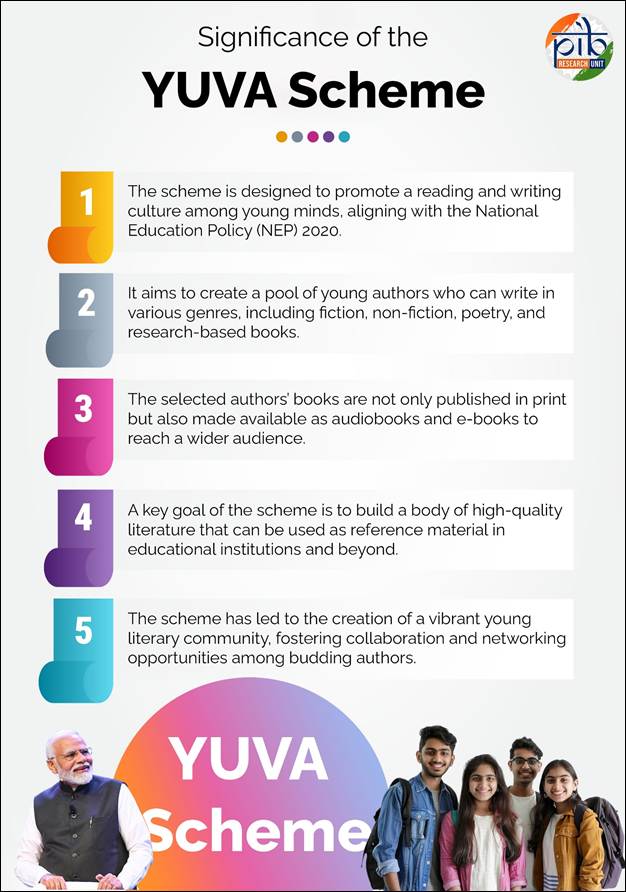
National Education Policy 2020 has emphasized on the empowerment of the young minds and creating a learning eco-system that can make the young readers/learners ready for leadership roles in the future world. India is considered to be a ‘young country’ because 66% of its total population are young and can be tapped for capacity and nation building. In this context, a national scheme for mentoring generations of young authors has proven to be a significant stepping stone for laying the foundation of the future leaders of the creative world. This scheme has been conceptualised on the premise that the 21st century India needs to groom a generation of young authors to create ambassadors of Indian literature and world view. In view of the fact that our country is ranked third in the arena of book publishing and we have a treasure trove of indigenous literature, India must project it at the global stage. The first mentorship scheme was launched on 31st May 2021, then subsequently in October 2022 and now in March 2025.
 

YUVA 2.0: Expansion and Achievements

Launched in October 2022YUVA 2.0 built upon the foundation of YUVA 1.0 with a renewed focus on ‘Democracy’ as the core theme. The scheme aimed to foster young writers’ engagement with India’s democratic values, traditions, and governance structures.

Theme and Vision

The Theme of PM-YUVA 2.0 was Democracy (Institutions, Events, People, and Constitutional Values). The scheme helped in developing a stream of writers who can write on various facets of Democracy in India encompassing the past, present and future. Besides, the scheme also provided a window to the aspiring youth to articulate themselves and present a comprehensive outlook of Indian democratic values at domestic as well as international platforms.


Selection and Implementation

  • The competition received an overwhelming response, with a diverse pool of participants from across the country.
  • 75 authors were selected through a competitive process. They were also required to submit a book proposal of 10,000 words.
  • The mentorship program included interaction with constitutional experts, historians, and renowned authors.
  • Special training sessions were held to enhance research skills, language proficiency, and storytelling techniques.


Outcomes and Impact

  • The Union Minister for Education launched 41 new books under the PM YUVA 2.0 scheme at the New Delhi World Book Fair 2025 in February.
  • Several books were published in multiple Indian languages, making them accessible to a broad readership.
  • Young authors gained national and international recognition, participating in events like the World Book Fair and literary forums.
  • Many participants had their books included in academic and government libraries for research and reference.
  • Some authors had the opportunity to meet and interact with policymakers and scholars, further enriching their perspectives.


YUVA 1.0: Inception and Legacy

The inaugural editionYUVA 1.0, was launched in May 2021 as part of the Azadi Ka Amrit Mahotsav celebrations to commemorate 75 years of India’s independence. The scheme aimed to empower young authors and provide them a platform to express their perspectives on India’s history and contemporary narratives.


Theme and Inspiration

The theme was National Movement of India with focus on Unsung Heroes; Little known facts about the Freedom Struggle; Role of various places in National Movement; Entries bringing out new perspectives related to political, cultural, economic, or science related aspects of national movement etc. as part of Azadi ka Amrit Mahotsav. This scheme helped to develop a stream of writers who can write on a spectrum of subjects to promote Indian heritage, culture and knowledge system.


Selection and Implementation

  • The contestants were asked to submit a manuscript of 5000 words.
  • 75 young authors were selected, representing diverse linguistic and regional backgrounds.
  • The selection was made by a committee constituted by National Book Trust (NBT).
  • Mentorship included training in writing, editing, and publishing processes.
  • Special sessions were conducted by eminent historians, journalists, and literary figures.
  • A consolidated scholarship of Rs.50,000 per month for a period of six months per author will be paid under the Mentorship Scheme.

Outcomes and Impact

  • The results were announced on 25.12.2021.
  • The books produced under YUVA 1.0 were translated into multiple Indian languages, enhancing their reach.
  • The initiative contributed to India’s literary heritage, encouraging young voices to document historical narratives.
  • Several young authors gained recognition, contributing to mainstream literature and academic discussions.
  • The scheme established a strong foundation for young writers, many of whom went on to publish additional books independently.
  • 10% royalty is being paid by NBT on publication and sale of the books.


Conclusion

The YUVA scheme, in its three editions, has played a crucial role in nurturing young literary talent in India. As the program continues to evolve, it reinforces India’s commitment to promoting creative expression, multilingual literary heritage, and a culture of reading and writing among the youth. The impact of the scheme is evident in the success stories of young authors whose voices have been amplified at both national and international levels. With continued support and innovation, the YUVA scheme will remain a cornerstone of India’s literary and cultural renaissance.

References

https://pib.gov.in/PressReleasePage.aspx?PRID=2110966

https://innovateindia.mygov.in/yuva-2025/

https://innovateindia.mygov.in/yuva/

https://pib.gov.in/PressReleasePage.aspx?PRID=1722644

https://pib.gov.in/PressReleaseIframePage.aspx?PRID=2101008

https://pib.gov.in/PressReleasePage.aspx?PRID=1811451

https://www.nbtindia.gov.in/writereaddata/attachmentNews/tuesday-june-1-202111-31-05-amyuva-scheme-for-mentorship-of-young-authors.pdf